Struggling to conceive can be emotionally overwhelming, especially when everything seems normal on the surface. Many women monitor ovulation, maintain a healthy lifestyle, and still wonder why pregnancy isn’t happening. Among the many reasons behind infertility, one of the most common yet often misunderstood issues is blocked fallopian tubes. Tubal factor infertility accounts for nearly one-third of female infertility cases, yet it often remains unnoticed until couples actively try to conceive.
The challenging part is that blocked tubes often develop silently. Many women do not experience clear symptoms, so the issue remains hidden for years. That is why understanding how fallopian tubes work, why blockages occur, and what early signs you should watch for becomes incredibly important. This article aims to provide clarity, support, and guidance so you feel equipped to take the next steps in your fertility journey with confidence.
What Are Fallopian Tubes and Why Are They So Important?
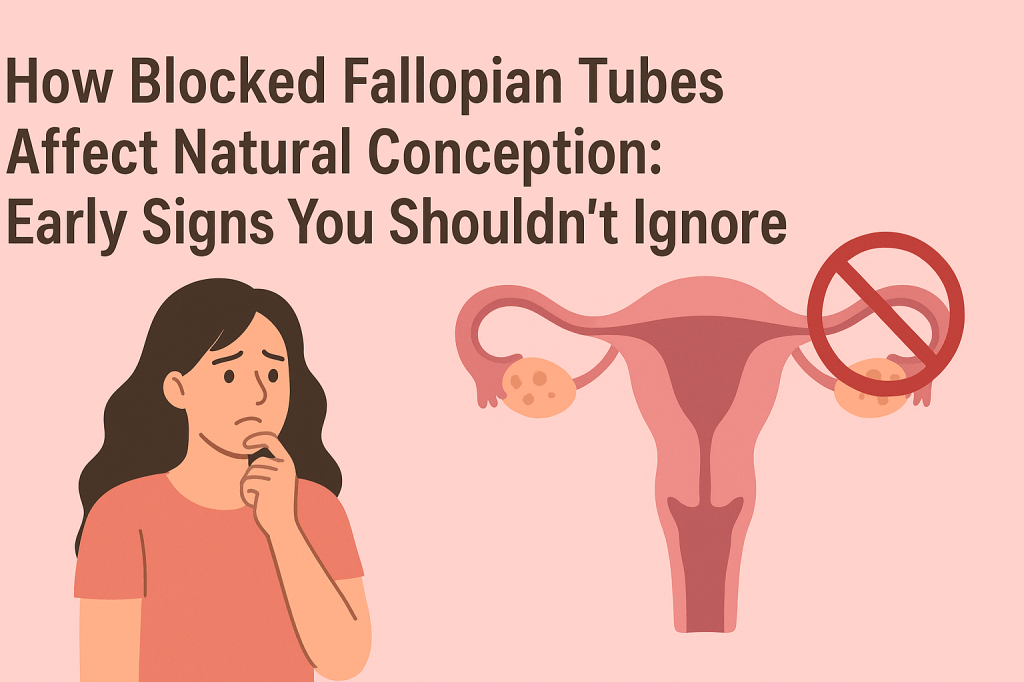
Fallopian tubes are two narrow, flexible tubes located on each side of your uterus. Each tube connects an ovary to the uterus, creating a pathway for both the egg and the sperm. Although small in size, their function is crucial for natural conception.
During a typical menstrual cycle, one ovary releases an egg in a process known as ovulation. The egg is then gently swept into the fallopian tube by tiny finger-like structures called fimbriae. Inside the tube, sperm travel from the uterus and meet the egg. If fertilization occurs, the embryo begins its journey toward the uterus, where implantation takes place and pregnancy begins.
If the fallopian tubes are blocked, damaged, swollen, or inflamed, this natural process is interrupted. A blockage can prevent sperm from reaching the egg altogether, or it may stop the embryo from safely reaching the uterus. In some cases, a partially blocked tube may cause an ectopic pregnancy, where the embryo implants inside the tube instead of the uterus—a dangerous situation requiring immediate medical attention.
How Blocked Fallopian Tubes Affect Natural Fertility
Tubal blockages differ in severity, and the impact on fertility depends on whether the tubes are partially or fully blocked and whether one or both tubes are affected.
If both fallopian tubes are completely blocked, sperm cannot reach the egg at all, making natural conception impossible. In such situations, IVF becomes the most reliable option, as it bypasses the tubes entirely by fertilizing the egg outside the body and placing the embryo directly in the uterus.
If only one fallopian tube is blocked, pregnancy is still possible naturally, but the chances decrease. The ovary on the blocked side cannot participate in the conception process because the egg released on that side cannot travel through the damaged tube. This reduces the opportunity for fertilization by approximately half.
A partial blockage presents a different set of challenges. It may still allow sperm and egg to meet, but the tube may be too damaged to transport the embryo to the uterus. This significantly increases the risk of ectopic pregnancy, miscarriage, or delayed conception. The tube may have scarring, inflammation, or fluid that interferes with normal function.
What Causes Fallopian Tubes to Become Blocked?
1. Pelvic Inflammatory Disease (PID)
PID is one of the leading causes of tubal blockage.
- Untreated infections like chlamydia or gonorrhea cause inflammation and scarring.
- Infections often remain silent, allowing long-term damage to form gradually.
- Chronic pelvic infections (even non-STI) can also create scar tissue over time.
2. Endometriosis
Endometriosis affects the tubes, ovaries, and surrounding pelvic organs.
- Endometrial-like tissue growing near the tubes causes inflammation and adhesions.
- Severe cases distort tube shape or block the pathway for egg and sperm movement.
- Endometriotic cysts (endometriomas) may pull tubes out of their natural position.
3. Previous Abdominal or Pelvic Surgeries
Surgical procedures can leave behind adhesions or scar tissue.
- Surgeries such as C-section, appendectomy, or cyst and fibroid removal may cause tubal restriction.
- Adhesions can twist, trap, or pull fallopian tubes out of alignment.
- Even old surgeries may impact fertility years later.
4. History of Ectopic Pregnancy
An ectopic pregnancy can cause significant damage to the affected tube.
- Scar tissue may remain even if the tube wasn’t removed.
- The damaged tube may not allow eggs to pass safely in future pregnancies.
5. Hydrosalpinx
A fallopian tube filled with fluid becomes enlarged and dysfunctional.
- The toxic fluid can leak into the uterus and prevent embryo implantation.
- Hydrosalpinx significantly lowers the success of natural conception and IVF.
6. Repeated or Undiagnosed Pelvic Infections
Chronic inflammation harms the tubes over time.
- These infections may not always be sexually transmitted.
- Silent infections slowly cause swelling, fluid buildup, and scarring.
7. Rare Causes (Less Common but Possible)
Additional factors that may block the fallopian tubes include:
- Tuberculosis (Genital TB): A major cause of infertility in countries where TB is common.
- Congenital abnormalities: Some women are born with improperly formed or absent tubes.
Early Signs of Blocked Fallopian Tubes
Blocked fallopian tubes often don’t cause clear or noticeable symptoms. Many women only discover the issue once they face difficulty getting pregnant. However, there are a few early signs and subtle clues that may indicate a problem:
- Trouble Conceiving
If you are under 35 and have been trying for a year without success—or over 35 and trying for six months—it may be a sign that your fallopian tubes need to be checked. - Persistent Pelvic Pain
Ongoing pain in the lower abdomen can be a warning sign.
- It may feel dull, sharp, or come and go.
- Pain often increases during periods or intercourse, especially if endometriosis or pelvic adhesions are involved.
- It may feel dull, sharp, or come and go.
- Unusual Vaginal Discharge
Changes in discharge, particularly watery or foul-smelling discharge, may indicate conditions like hydrosalpinx. - Painful or Heavy Periods
Severe menstrual pain, especially when accompanied by bloating or digestive discomfort, may point to endometriosis or inflammation around the tubes. - Pain During Intercourse
Discomfort during sex can happen when adhesions or swollen tubes affect nearby pelvic structures. - History of Untreated Pelvic Infections
Past episodes of fever, abnormal discharge, or lower abdominal pain might have been unnoticed infections (like PID) that later caused tubal scarring.
How Doctors Diagnose Blocked Fallopian Tubes
Diagnosing blocked fallopian tubes typically requires imaging tests performed by a gynecologist or fertility specialist. One of the most common tests is hysterosalpingography (HSG), in which a contrast dye is injected into the uterus and X-rays are taken to observe whether the dye flows freely through the tubes. If the dye cannot pass through, it may indicate a blockage. Interestingly, some women conceive naturally after an HSG because the dye can flush out small blockages.
Another diagnostic method is sonohysterography, which uses ultrasound along with saline to evaluate the uterus and sometimes the tubes. Although less accurate for detecting blockages, it may help identify fluid or abnormalities.
Laparoscopy is considered the gold standard for diagnosing tubal issues. During this minor surgical procedure, a camera inserted through the abdomen allows the doctor to directly view the tubes, ovaries, and pelvic organs. Laparoscopy not only provides the most accurate diagnosis but also allows the doctor to treat certain conditions—such as removing adhesions or endometrial lesions—during the same procedure. Blood tests and infection screenings can also help identify underlying causes such as PID or inflammation.
Treatment Options for Blocked Fallopian Tubes
Laparoscopic Surgery
Laparoscopic surgery is a minimally invasive procedure used to treat blocked fallopian tubes by removing scar tissue, adhesions, or endometriosis that may be interfering with tubal function. Through small incisions, doctors can repair or reopen the tubes, improving the chances of natural conception—especially when the blockage is mild or located on the outer part of the tube.
Tubal Cannulation
Tubal cannulation is a non-surgical method used when the blockage is near the uterine end of the fallopian tube. In this procedure, a thin catheter is gently passed through the cervix into the tube to clear the obstruction. It helps restore normal tubal function and is ideal for women with small, recent blockages.
Hydrosalpinx Management
Hydrosalpinx occurs when a fallopian tube is filled with fluid, which can leak into the uterus and reduce both natural and IVF pregnancy rates. To treat this, doctors may recommend removing the affected tube, blocking the tube to prevent fluid from reaching the uterus, or draining it before IVF treatment. Managing hydrosalpinx greatly improves the chances of successful embryo implantation.
Antibiotic Treatment
Antibiotics are used when an active pelvic infection—such as PID or sexually transmitted infections—is present. While antibiotics can effectively control or eliminate the infection, they cannot undo any scarring or damage that has already formed inside the tubes. Early treatment is important to prevent long-term fertility issues.
IVF (In Vitro Fertilization)
IVF is the most effective treatment for severe or irreversible tubal damage. This technique bypasses the fallopian tubes entirely by allowing fertilization to occur in a laboratory setting. After the egg and sperm form an embryo, it is placed directly into the uterus. IVF offers high success rates and reduces the risk of ectopic pregnancy in women with tubal issues.
What You Should Do Next
If you suspect an issue with your fallopian tubes, it is important not to delay seeking medical advice. Early testing allows doctors to identify problems before they worsen and gives you more treatment options. A fertility specialist can help you understand the cause of the blockage and recommend the most suitable approach.
Along with medical evaluation, maintaining good reproductive health is essential. Regular STI screenings, safe sex practices, stress management, and maintaining a healthy lifestyle can support your fertility journey. Keeping track of your symptoms—such as pain patterns, menstrual changes, or unusual discharge—can also help your doctor make a more accurate diagnosis.
Most importantly, be gentle with yourself. Issues related to fallopian tubes are common and often beyond your control. You did nothing wrong. What matters now is awareness, timely evaluation, and receiving the right guidance.
Conclusion: Blocked Tubes Don’t Define Your Fertility Journey
Blocked fallopian tubes may seem frightening, but they do not mark the end of your hopes of becoming a parent. Modern treatments, including tubal repair, laparoscopic surgery, and IVF, offer real and effective solutions. Thousands of women with tubal blockages go on to conceive healthy pregnancies with the right care.
Your fertility journey may take a different path than you first imagined, but that path can still lead to the family you dream of. With proper diagnosis, the right treatment, and a supportive medical team, you remain much closer to your goal than you realize. You deserve clear answers, compassionate care, and unwavering hope and this is just the beginning of a new chapter.
If you are experiencing pelvic pain, difficulty conceiving, or have a medical history that puts you at risk, consider consulting a fertility specialist for a proper evaluation.
Couples seeking fertility care in Gurgaon may explore reputable centres such as:
Thakral Hospital & Fertility Centre, listed on trusted platforms like
Best IVF Centre in Gurgaon,
NearMyHome,
MyHospitalNow,
Bajaj Finserv Health,
BrownBook,
GetFreeListing,
BlackLinkUS,
With a focus on advanced fertility treatments, personalized medical care, and emotional support, it helps couples move forward on their parenthood journey with confidence and clarity. If blocked fallopian tubes are affecting conception, remember that effective treatments are available and the dream of becoming a parent may be closer than it seems.
 Dailyhealthtalk
Leave a comment